Italian
 German
 French
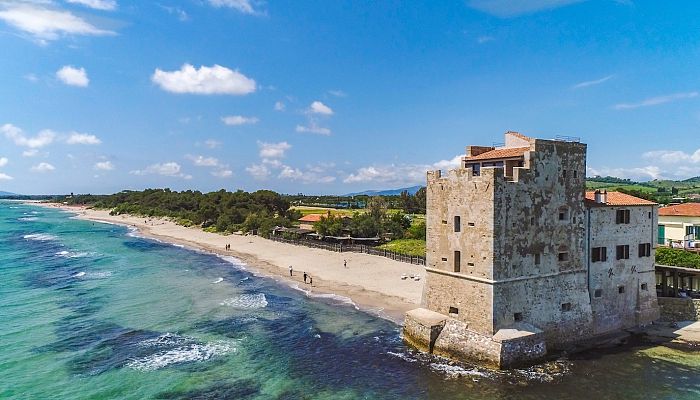

What to See in Maremma ❤️ Top 10
- Category What to visit in Maremma
Must see in Tuscany Maremma: Top 10 things to see!
Number of views: 310816Agriturismo - Where to stay overnight
- Video: 10 places must see in Tuscany Maremma
- 1. Argentario
- 2. Grosseto
- 3. Capalbio
- 4. Massa Marittima
- 5. Pitigliano
- 6. Parco dell'uccellina
- 7. Isola del Giglio
- 8. Cascatelle di Saturnia
- 9. Castiglione della Pescaia
- 10. Scansano
- Watch the video:
Watch the video:
The Maremma Tuscany is one of the most diverse areas of the region, where historic hilltop villages, rolling countryside with vineyards and olive groves, coastal landscapes, natural thermal springs, and protected natural areas all come together. This variety makes it a suitable destination both for those interested in historic towns and inland scenery and for travelers who prefer the sea, outdoor activities, or food and wine experiences.
Deciding what to see in the Maremma Tuscany is not always straightforward, as distances can be considerable and the number of interesting places is quite large. For this reason, this guide brings together 10 places not to miss, selecting locations that differ from one another to help you plan your trip more easily. You will find well-known villages such as Pitigliano, coastal destinations like Monte Argentario and Castiglione della Pescaia, natural highlights such as the Maremma Natural Park, and iconic locations like the Saturnia thermal waterfalls. This selection can be used to build an itinerary of two, three, or more days, offering practical ideas to help you decide where to start and which stops to include depending on the season and the time available.
1. Argentario

gem set along the coast, Argentario has the charm of an island with the convenience of the mainland, thanks to the two sandy strips that connect it to the mainland and create unique landscapes between sea and lagoon. It is an ideal destination for both those looking for crystal-clear waters and those who enjoy charming villages and coastal views.
Be sure to explore the two main towns: Porto S. Stefano, a lively and colorful urban center, perfect as a base for exploring the area. Here it is worth taking a walk along the harbor, visiting the Mediterranean Aquarium, and climbing up to the Spanish Fortress to enjoy beautiful views over the sea and toward the islands of Giglio and Giannutri. It is also the departure point for ferries to Giglio Island, so it can be interesting to dedicate at least half a day to this town.
Porto Ercole, on the other hand, is more intimate and picturesque, enclosed by fortifications and crossed by narrow streets and colorful buildings. The historic center is pleasant to explore on foot at a relaxed pace, walking up toward the Aldobrandesca Fortress or Forte Filippo for spectacular views of the coastline. The atmosphere here is quieter than in Porto S. Stefano, making it ideal for an evening stroll or dinner in one of the local restaurants.
Beyond the towns, Argentario is famous for the Panoramic Road, which circles the promontory and offers continuous sea views and access to small coves and beaches such as Cala del Gesso or Cala Piccola. To fully enjoy the area, it is best to plan at least one or two days, allowing time to alternate between village visits, beach stops, and scenic viewpoints.
A practical tip: during summer months, traffic and parking can be challenging, especially on weekends, so arriving early in the morning or choosing accommodation with parking included is advisable. Comfortable shoes are useful for walking through historic centers and reaching some coves, which often require short walks.
➡️ Porto Ercole
Where to sleep: Farm Holidays nearby Argentario
2. Grosseto

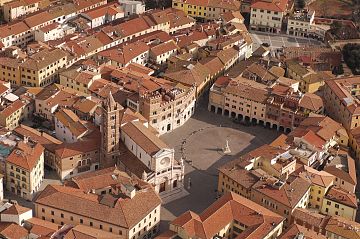
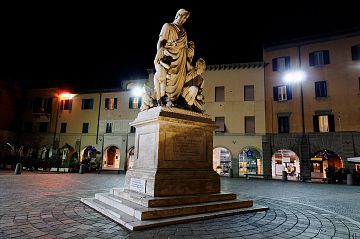
Grosseto, the largest city of the Maremma region, is shaped like a fortified star: about 2,900 meters of massive walls arranged in a hexagonal shape, with bastions and guardhouses that still define the city’s outline today. The Medici walls are remarkably well preserved and can be walked or cycled along, making them an excellent starting point for a visit and offering pleasant views over the historic center and surrounding green avenues.
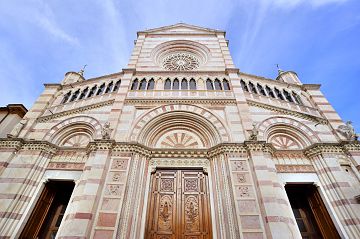
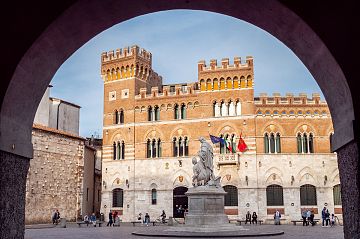
Inside the walls, the medieval historic center is compact and easy to explore on foot, filled with civil and religious monuments that reflect the city’s long history. One of the main highlights is Piazza Dante, the central square, where visitors can admire the Cathedral of San Lorenzo, recognizable for its distinctive black-and-white marble façade, and the Palazzo Aldobrandeschi, an elegant historic building that now houses provincial offices. Wandering through the smaller streets nearby reveals local shops, cafés, and traditional restaurants serving typical Maremma cuisine.
A relaxed visit to Grosseto usually requires half a day, while those interested in museums and longer walks along the walls may want to plan a full day. A practical tip is to explore the center in the morning or late afternoon, especially during summer when temperatures can be high. Grosseto also serves as a convenient base for exploring nearby attractions, including the Maremma Natural Park and the Tyrrhenian coast beaches, both reachable by car in a short time.
➡️ Grosseto, the capital of Maremma
Where to stay: Farm Holidays nearby Grosseto
3. Capalbio

Capalbio preserves ancient atmospheres and, more than a town, it is an ancient castle of stands, embrasures and patrol paths, with walls dating back to the fifteenth century. Capalbio attracts demanding tourists who enjoy the charm of medieval lanes, the pristine coast and sea and the beauty of the surrounding woods.
➡️ Capalbio, the city overlooking the sea
Where to stay: Farm Holidays nearby Capalbio
4. Massa Marittima

The charm that pervades Massa Marittima is truly unique and takes shape in the beautiful Piazza Garibaldi, the true heart of the town and one of the most evocative places in the Maremma area. Here stand the Podestà and Priori Palaces, significant examples of medieval civic architecture, while the impressive Romanesque-Gothic Cathedral dominates the square. Dedicated to Saint Cerbone, the cathedral is also worth visiting inside to admire artworks, frescoes, and its solemn atmosphere. The square is an excellent starting point for exploring the historic center, and it is worth spending a few minutes observing the architectural details or simply enjoying the surroundings, perhaps seated at one of the small cafés nearby.
Walking through the village among historic buildings, visitors encounter stunning views over the Maremma countryside and, on clear days, even as far as the sea. Among the places worth seeing are the upper part of the town, with its ancient walls, towers, and characteristic medieval streets, as well as several easily reachable panoramic viewpoints. A full visit to the historic center usually requires about two to three hours, while those wishing to explore museums and monuments more thoroughly may want to dedicate half a day.
For tourists, comfortable shoes are strongly recommended, as many streets are uphill and paved with stone. During warmer months, it is advisable to visit early in the morning or late in the afternoon, when temperatures are more pleasant and the light enhances the colors of the buildings. Spending some time in the square in the evening can also be particularly rewarding, when the lighting highlights the cathedral and surrounding historic buildings.
Where to stay: Farm Holidays nearby Massa Marittima
5. Pitigliano
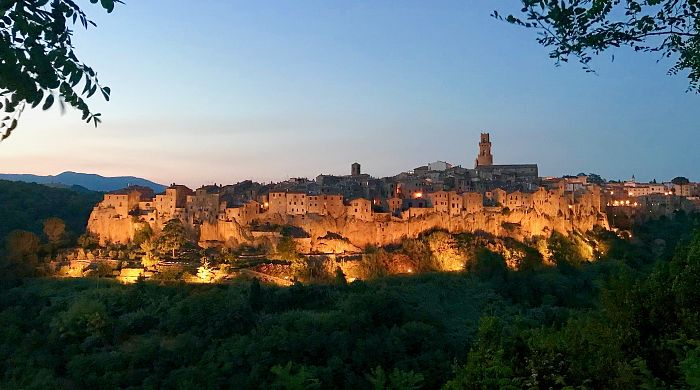
Pitigliano reveals itself to visitors in all its charm already from afar, when the village appears perched dramatically on a tuff cliff, creating a truly striking view, especially in the early morning or at sunset. The endless series of alleys, narrow streets, small stairways, and viewpoints overlooking the steep cliff below make it a unique and enchanting place, perfect to explore slowly on foot, letting curiosity guide you through panoramic spots and hidden corners.
While wandering through the historic center, it is worth taking time to visit the Jewish Quarter, one of the most characteristic in Tuscany, where you can see the Synagogue, ancient workshops, and cellars carved into the tuff rock. Among the highlights not to be missed are Palazzo Orsini, home to museums and exhibitions, and the Cathedral of Saints Peter and Paul, located in the main square, an ideal place for a short break.
To visit Pitigliano at a relaxed pace, at least 2–3 hours are recommended, while half a day allows time to explore the surroundings as well, such as the impressive Etruscan Vie Cave, ancient paths carved into the rock that are perfect for a short hike. Comfortable shoes are strongly recommended, as the historic center includes many uphill paths and steps, and bringing a camera is essential: the viewpoints along the walls offer spectacular views over the surrounding valley.
For an even more enjoyable experience, it is best to arrive early in the morning or later in the afternoon, when crowds are smaller and the warm light enhances the colors of the tuff stone, making the visit even more memorable.
➡️ Pitigliano
Where to stay: Farm Holidays nearby Pitigliano
6. Parco dell'uccellina

Among the intense scents of aromatic herbs, the bright colors of wild berries, and the calls of animals, the Parco dell'Uccellina (Regional Park of Maremma) welcomes visitors by revealing both its gentle and its wild side. This contrast of elements awakens the senses and brings the pleasure of feeling immersed in a rediscovered paradise, where nature still dominates among forests, pinewoods, open countryside, and unspoiled coastline.
The park stretches along the Maremma coast and offers several routes suitable for both relaxed walks and more demanding hikes. Among the most fascinating places to see are the Tower of Collelungo, an ancient coastal watchtower overlooking the sea, and the natural beaches that can be reached on foot or by bicycle. Along the way, it is not unusual to encounter wildlife such as deer, wild boar, or the traditional Maremma cattle grazing freely. The Trappola marsh area is also particularly popular with birdwatchers, thanks to the presence of many bird species throughout the year.
To explore the park comfortably, it is advisable to plan at least half a day, although visitors who wish to experience it more fully should allow a full day, choosing one of the marked trails according to their fitness level. During the summer months, starting early in the morning is recommended to avoid the heat and to increase the chances of spotting wildlife.
It is useful to know that access to certain areas is regulated and may require advance booking, especially during peak seasons. Visitors are advised to wear comfortable walking or hiking shoes, carry enough water, and bring sun protection and a hat during warmer periods. Spring and autumn are often considered the best seasons to visit, thanks to milder temperatures and landscapes rich in colors and natural fragrances.
This protected environment represents a perfect balance between untouched nature and accessible exploration, offering visitors an authentic and relaxing experience in one of the most characteristic landscapes of the Maremma region.
➡️ Maremma Park
Where to stay: Farm Holidays nearby Maremma Park
7. Isola del Giglio

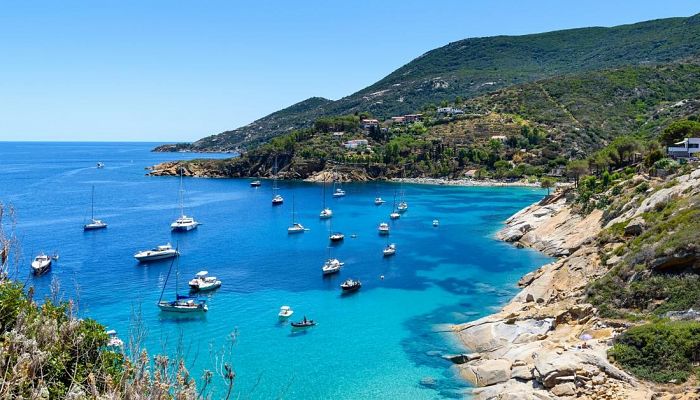
Like a pearl in an oyster, the small island of Giglio lies cradled by warm blue seas in the southern corner of the Tuscan Archipelago. Giglio’s mild climate, unspoiled nature, and crystal-clear emerald waters offer memorable experiences throughout the year. Beyond the sea, it is worth exploring the island’s three main settlements: Giglio Porto, with its colorful houses lining the harbor; Giglio Castello, a well-preserved medieval hilltop village enclosed by ancient walls; and Giglio Campese, known for its wide sandy beach and striking sunsets.
In addition to relaxing by the water, popular activities include hiking along scenic trails that cross the island and lead to quieter coves, ideal for those seeking more secluded spots. The exceptionally clear waters also make Giglio a favored destination for snorkeling and diving, particularly around its granite cliffs. To appreciate the island properly, plan at least one full day, although staying two or three days allows for a more relaxed visit.
The best times to visit are May to June and September to early October, when temperatures are pleasant and visitor numbers are lower than in peak summer. A practical tip: book the ferry from Porto Santo Stefano in advance, especially during summer months, and wear comfortable shoes if you intend to explore trails or reach less accessible beaches.
Where to stay: Farm Holidays nearby Isola del Giglio
8. Cascatelle di Saturnia
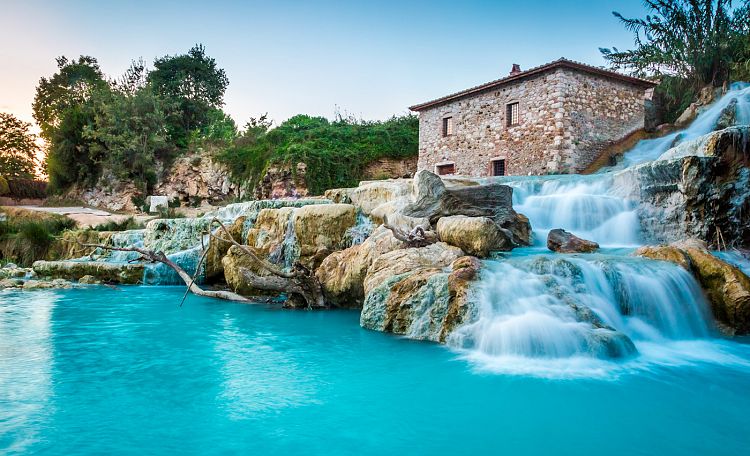
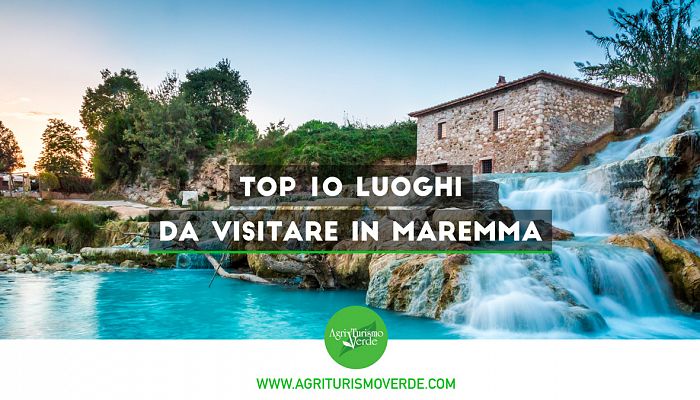
The enchanting Cascatelle di Saturnia (or Cascate del Mulino) are a series of small natural pools carved into limestone rock, where warm sulfur-rich water, known for its therapeutic properties, flows all year round at a constant 37°C (98.6°F). Also known as the Cascate del Mulino, they are true free thermal baths: accessible free of charge throughout the year, even at night, and among the most scenic natural spa locations in Italy for those seeking relaxation surrounded by nature.
The site is located near the village of Saturnia in Tuscany and is easily reachable by car. A dedicated parking area is available nearby, from which the waterfalls can be reached with a short walk of just a few minutes. The landscape is particularly picturesque thanks to the presence of the historic mill overlooking the pools, making the location especially popular for photography, particularly at sunrise and sunset when the light enhances the colors of the water and the steam rising from the pools.
In addition to bathing in the natural pools, visitors can observe the formation of the small limestone basins, shaped over time by mineral deposits carried by the flowing water. The main experience is, of course, soaking in the pools, where visitors can relax and enjoy the beneficial properties of the sulfurous water, traditionally appreciated for supporting skin health and muscle relaxation.
To fully enjoy the visit, it is recommended to allow at least 1–2 hours, although many visitors stay longer, especially during cooler seasons when the contrast between the fresh air and the warm water makes the experience even more enjoyable. During peak seasons and weekends, the area can become crowded, so arriving early in the morning or late in the evening is advisable for a quieter experience.
Practical tips for visitors include bringing non-slip sandals, as the rocks can be slippery, a dark-colored swimsuit (sulfur can stain light fabrics), and a towel or bathrobe. Nearby, there are bars, restrooms, and refreshment areas, but planning ahead is recommended, especially on busy days.
The Cascatelle di Saturnia are therefore an unmissable stop when visiting southern Tuscany, ideal both for a relaxing break during a broader itinerary and as a destination dedicated to natural wellness.
➡️ Cascate del Mulino, Free thermal baths of Saturnia
Where to stay: Farm Holidays nearby Saturnia
9. Castiglione della Pescaia

Between the blue of the sea and the green of the hills lies Castiglione della Pescaia. The town is an ancient fishing village, as suggested by the name “della Pescaia,” and in the picturesque canal-port there are pleasure boats of all kinds, while every evening fishing boats return with their lively catch, creating a vibrant atmosphere especially at sunset, when restaurants and small bars along the canal begin to fill with people. Walking along the harbor is one of the simplest and most enjoyable ways to experience local life, perhaps stopping to taste fresh seafood or simply watching the fishermen unload their catch.
Climbing up on a spur of Monte Petriccio stands the ancient medieval village enclosed by an impressive wall with towers, gateways, and a 15th-century castle, visible from afar and reachable with a short uphill walk from the modern town. Visiting the historic center generally takes about 1–2 hours: along its narrow paved streets you will find scenic viewpoints overlooking the sea and the Maremma plain, small artisan shops, and quiet squares ideal for photos or short breaks. The Aragonese Castle is not always open to visitors, but the walk up is worthwhile for the views from the upper parts of the walls.
In addition to the medieval village, one of the main attractions is the long sandy beach stretching at the foot of the town, well known for its clean waters and organized facilities, suitable both for families and for those looking for equipped beach clubs or free beach areas. Nearby, it is also worth spending some time at the Diaccia Botrona Nature Reserve, easily reachable by bike or car and ideal for nature lovers and birdwatching.
To explore Castiglione della Pescaia at a relaxed pace, it is advisable to plan at least half a day, while a full day allows you to combine the visit to the old town with some time at the beach or a walk in the surrounding natural areas. During summer months the town becomes very busy, so arriving early in the morning or later in the afternoon can help with parking and allow for more comfortable temperatures during the visit.
➡️ Castiglione della Pescaia: a place with enchanting beaches
Where to stay: Farm Holidays nearby Castiglione della Pescaia
10. Scansano

Scansano lies in the inland hills of the Maremma, along a stretch of land between the coast and the slopes of Monte Amiata. The landscape is defined by green rolling hills filled with pastures and lined with rows of vineyards and olive groves, whose colors change with the seasons. The town is well known for the success of its local red wine, Morellino. In Scansano and the surrounding area, wine shops and wineries are regularly open for tastings of this lively wine, known for its intense flavor and refined aromas.
Beyond its wine culture, the historic center is worth exploring at a relaxed pace, wandering through stone alleys and small viewpoints overlooking the surrounding countryside. A visit to the Archaeological and Vine and Wine Museum offers useful insight into the area’s long agricultural tradition and helps visitors better understand the strong connection between the land and its wine production. In the surrounding countryside, short driving or cycling routes can be organized through the Morellino hills, stopping at local farms for guided tastings or to purchase regional products.
Half a day is usually enough to visit Scansano, though it can easily become a full-day experience if one or two winery stops or a countryside walk are included. The months from April to June and from September to October are generally the most pleasant, when temperatures are mild and the vineyards display particularly striking colors. A practical tip is to book tastings in advance, especially on weekends and during the harvest season, when visitor numbers increase noticeably.
➡️ Scansano ❤️ the village of Morellino
Where to stay: Farm Holidays nearby Scansano
3-Day Itinerary in the Maremma Tuscany
A three-day itinerary allows you to explore the main highlights of the Maremma at a comfortable pace, leaving time for scenic stops, cultural visits, and moments in nature.
Day 1 – Historic villages and thermal springs
Start the morning in Pitigliano, one of the most distinctive villages in the Maremma, dramatically set on a tuff cliff. Continue to Sovana, a small medieval village known for its Etruscan heritage and historical architecture. In the afternoon, head to Saturnia to relax at its famous natural thermal waterfalls. Visiting in the late afternoon or early evening usually offers a quieter experience.
Day 2 – Nature and coast
Dedicate the second day to the coastline and natural landscapes. The Maremma Natural Park offers hiking routes of varying difficulty, with opportunities to observe local wildlife and Mediterranean vegetation. Alternatively, spend time in coastal towns such as Castiglione della Pescaia, combining a walk through the historic center with some time at the beach. During summer months, arriving early in the morning helps avoid parking difficulties.
Day 3 – Inland hills and villages
The final day is ideal for exploring inland hill towns. Scansano is a good stop for a walk through its historic center and a wine tasting. Continuing further, villages such as Magliano in Toscana or Montemerano offer peaceful settings and scenic views across the countryside. This day works best at a relaxed pace, with short drives between villages.
When to Visit the Maremma
The Maremma can be visited year-round, but certain seasons are especially suitable depending on your travel plans.
Spring (April–June)
One of the most pleasant times to visit. Temperatures are mild, vegetation is lush, and villages are less crowded than in summer. Ideal for hiking, sightseeing, and exploring inland areas.
Summer (July–August)
Best suited for beach-focused travel. Coastal towns are lively but also busier, and temperatures inland can be high. Plan sightseeing activities early in the morning or late afternoon.
Autumn (September–October)
A particularly attractive season, especially for countryside landscapes and wine-related experiences. Temperatures remain comfortable, and vineyard colors create striking scenery.
Winter (November–March)
Less crowded and suitable for travelers seeking quieter visits to historic villages or thermal areas. Some services may operate on reduced schedules, so checking opening hours in advance is recommended.
FAQ about the Maremma Tuscany
How many days are needed to visit the Maremma?
Three days are enough to see the main highlights, while 4–5 days allow for a more relaxed exploration.
What is the most beautiful village in the Maremma?
Pitigliano is often considered among the most scenic, but Sovana, Montemerano, and Magliano in Toscana are also highly worth visiting.
Is a car necessary to visit the Maremma?
Yes, having a car is usually the most practical way to move between villages, parks, and coastal areas.
Is the Maremma suitable for families with children?
Yes, the region offers beaches, nature trails, and villages that are generally easy to explore on foot.
Can the Maremma be visited outside the main season?
Yes, spring and autumn are often excellent periods thanks to milder temperatures and fewer crowds.